
A melodic sequence, formed exclusively from the various notes that form a chord, gives the complete sensation of said chord, especially when the notes succeed each other with a certain speed, and are equal in duration. These chords are called Broken, Figured, or Arpeggiated Chords.
In contrast, the term Plated Chords are chords whose notes are struck simultaneously.
A chord can be broken in many different ways, which gives rise to various melodic figures or designs:
Example
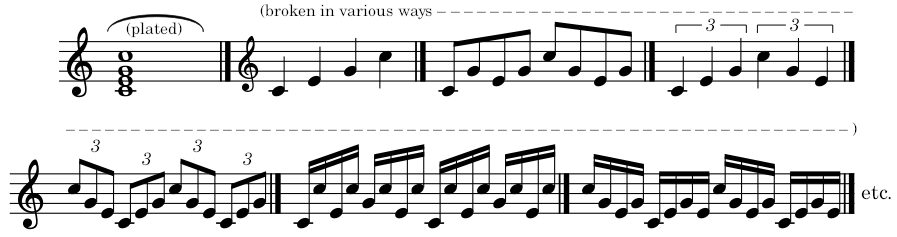
Broken chords are frequently used in instrumental music. Besides their melodic interest, the serve to give movement to the parts, to vary the designs, etc.. But especially to produce the effect of harmony through a single instrument which only possesses simple melodic capabilities, which could only be rendered by several simultaneous parts if the harmony was plated.
A succession of broken chords must be able to be constructed in the plated state while preserving the positions of the various notes without faults in realization. This test suffices to testify that a broken harmony is correct. Thus the apparent errors, indicated by small lines in Ex. 2 and 3, have no inconvenience, and could at most become an issue only if the movement were very slow.
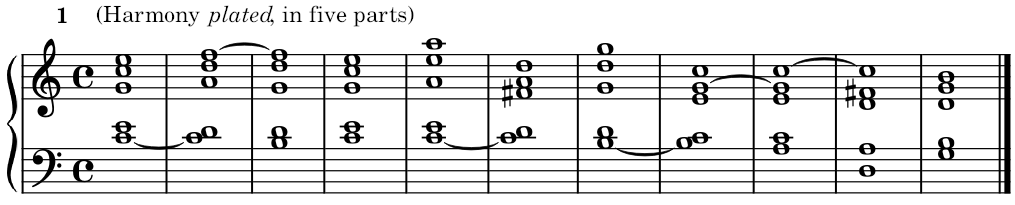
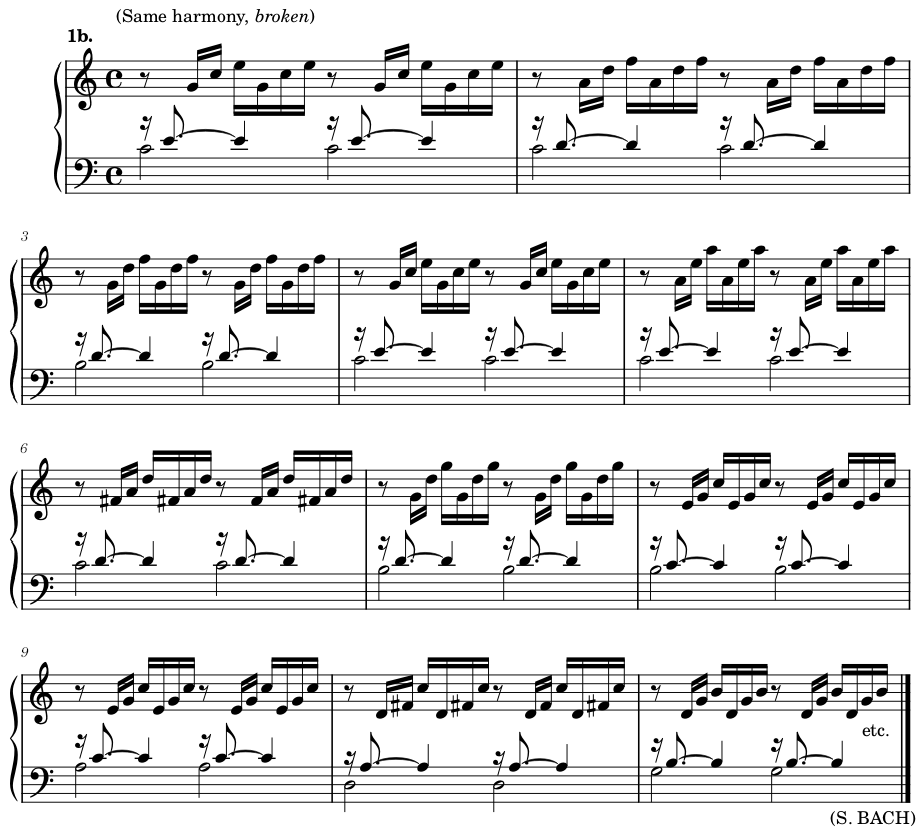


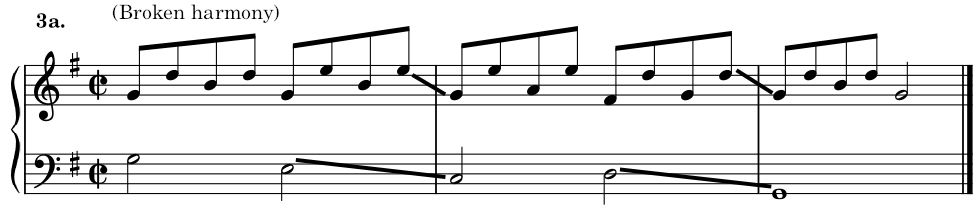

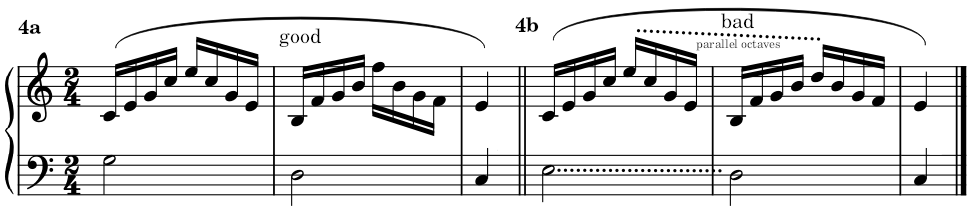
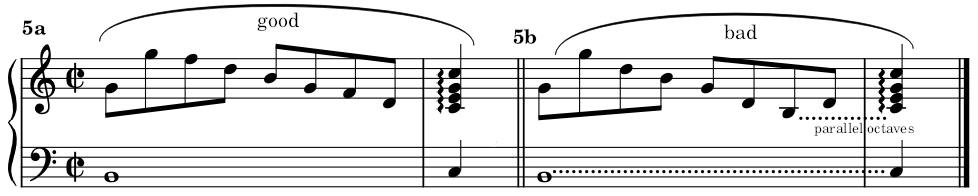
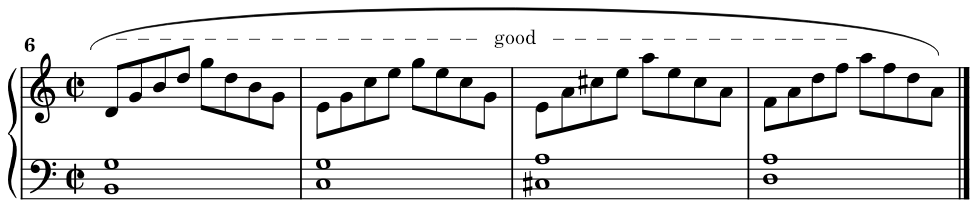
Regarding broken chords similar to changes in position or changes of state previously mentioned in Chapter 5, or melodic strokes known as Arpeggios, the rules and observations in CH. 5.2 apply to them. However, in these kinds of melodic formulas, its necessary to consider the most important notes which the ears capture more easily. These are generally: the highest note of the stroke (compare Ex. 4a to 4b), sometimes the lowest note (compare Ex. 5a to 5b). Inner notes aren’t considered (Ex. 6), except when one of these inner notes become important due to duration or accent (Ex. 7.)

CONCLUSION: In whatever form a broken harmony is laid out, its always preferable to treat as if it were in the plated state, as much as possible.
 Old Music Theory