
Any dissonant chord requires a resolution chord. Furthermore, certain dissonant chords cannot be approached without a preceding chord that prepares its dissonant note. Thus, it follows that a progression, in the context of dissonant chords, has two meanings. The progression from the preparation chord to the dissonant chord, and from the dissonant chord to its resolution chord.
The rules on progressions of chords in general are outlined in Chapter 4. These rules equally apply to dissonant chords, with some adjustments due to the notes with forced resolutions. The main adjustment is because the root note mustn’t resolve to the same note as the dissonant note (Rule 4 of 13.1.) This prevents a seventh note to progress to its resolution chord by a progression of a third below. Example:
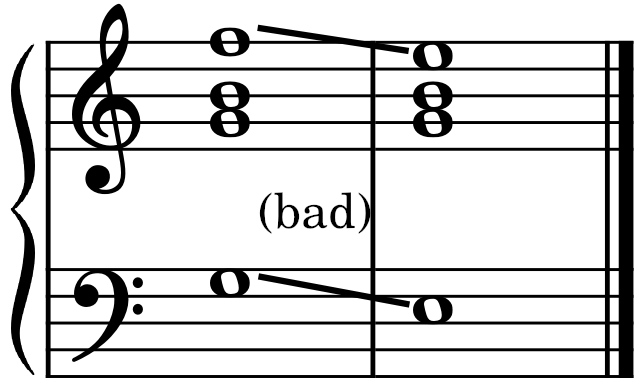
Thus, dissonant chords can move less freely than consonant chords, as certain progressions are hindered by the dissonant note.
Natural Resolution of Dissonant Chords
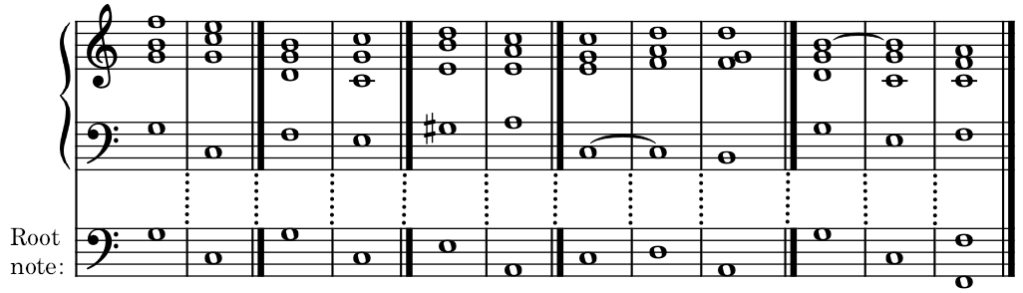
Every dissonant chord has a natural tendency to resolve to the chord (consonant or dissonant) of the fifth below (or fourth above). This resolution is preferred by the musical sense and is called the natural resolution. All other resolutions are exceptional resolutions.
In other words: the natural resolution of a dissonant chord takes place by a progression of fifths below, provided that the constrained notes make their regular resolution (Ch 13.1.) Examples:
Exceptional Resolution of Dissonant Chords
The resolution of a dissonant chord may be a progression other than a fifth below, provided each of the constrained notes have a regular or exceptional resolution (13.1). Examples:
Dissonant note resolves regularly:
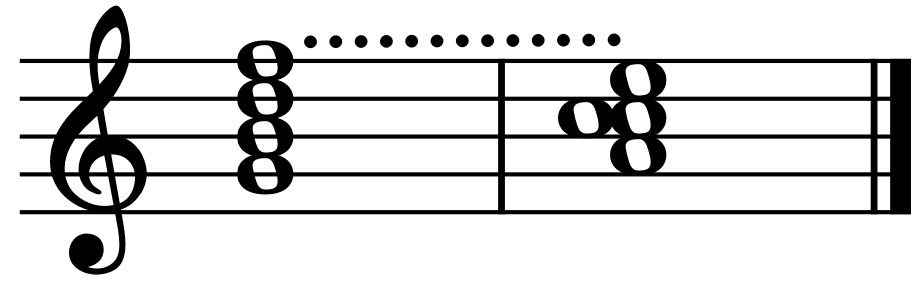
Dissonant note resolves in place:
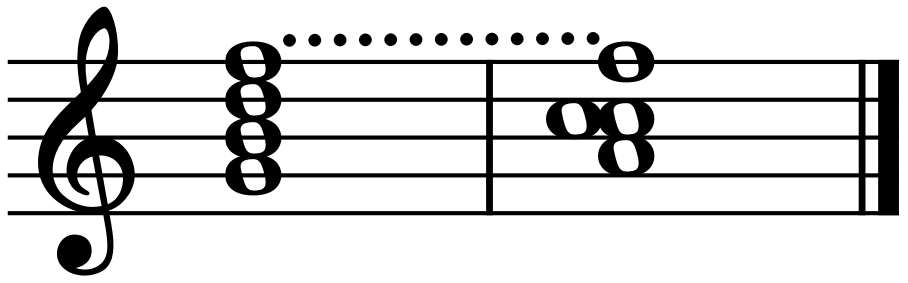
Dissonant note resolves chromatically:
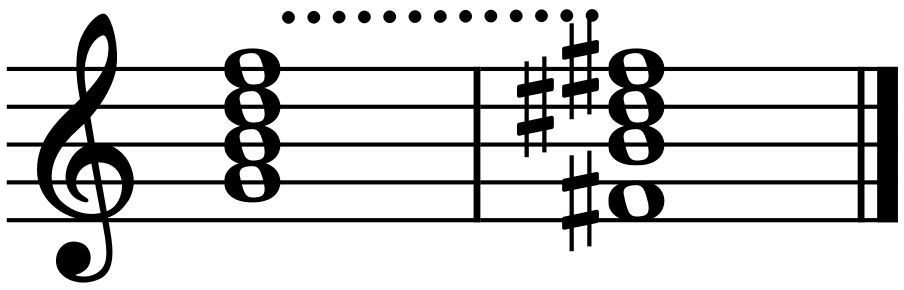
Dissonant note resolves enharmonically:
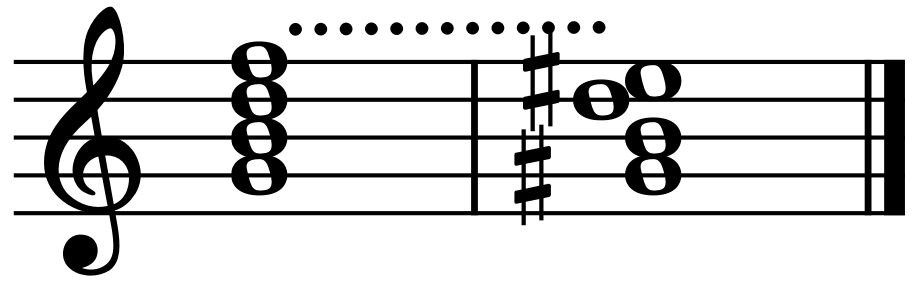
On Exceptions: As each dissonant chord is discussed, some the exceptions will be identified either in the practice or resolution of these chords. These exceptions allow for not preparing certain dissonances or not resolving them according to the preceding principles. The student will only practice those purposely marked as numerous, and which only few exist. Abstain completely from others.
Second Inversion of Dissonant Chords
Every second inversion produces a perfect fourth that must be prepared and resolved (7.2). Thus, a dissonant chord with a perfect fifth requires 2 preparations: preparation of the dissonant note(s) (unless its optional, 13.1), and preparation of the fourth. It also requires a 2 resolutions, that of the dissonant note(s) and the fourth.
In the rigorous style, the second inversion of all dissonant chords is prohibited, even when the fourth is prepared. In the free style its unusual in most of these chords, as its effect is generally bad.
 Old Music Theory