
The First Inversion is the result of placing the fifth of the chord in the Bass. Example:
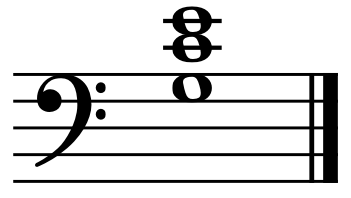
In this inversion, the bass (fifth) forms an interval of a fourth and sixth with the upper parts, hence the name of the chord of fourth and sixth or sixth and fourth, its figure is 6 4.
The second inversion, far from the gentleness of the first inversion, is harsh, or at least often framed as such. This inversion has an assertive quality, which leads to a tonal conclusion most of the time.
Because of this tonal power, the second inversion applied to second and third order chords (3.2) gives them too much importance. Therefore, its mainly and almost exclusively used with the chord of the best degrees (1st, 4th, 5th). Yet, its use requires precautions regarding the interval of the fourth.
Note: Although the second inversion is generally only practiced with the tonic (1st), subdominant (4th), and dominant (5th) (3.2), there are exceptions where it can be applied to other chords, provided they are not given importance and only placed on weak beats. Example:

 Old Music Theory