
The First Inversion is the result of placing the third of the chord in the Bass. Example:
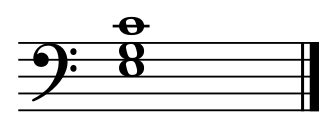
In this inversion, the bass (third) forms an interval of a sixth with the root. Aside from the name of the sixth chord, its figure is 6, sometimes 6 3.
The first inversion has a particularly sweet and harmonious tone. This characteristic applies to all chords, consonant or dissonant. It often alleviates the imperfections and harshness of certain states and certain realization exceptions.
Exceptions
Exception #1: Tonic (1st) to Supertonic (2nd) in the root position is a little harsh and practiced rarely. By putting the supertonic in the first inversion the progression becomes very harmonious and is used very frequently. Examples:
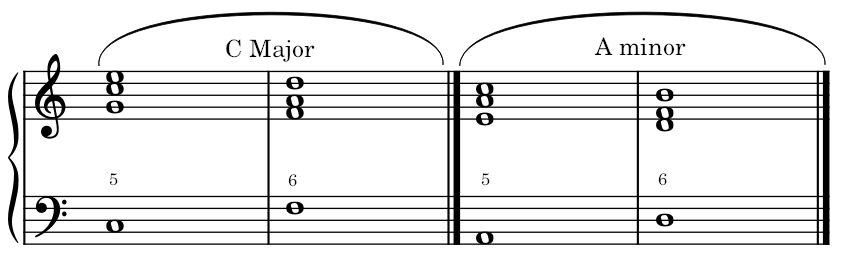
This applies to all progressions by seconds (above or below). Their effect is always softened by the first inversion, either on the first chord, especially the second chord, or both.
Exception #2: All the degrees of the major scale can be chained by a progression of seconds, including the leading tone (7th degree.) Example:

This progression is known as the series of sixths (6 for 1st inversion). It can only be realized in four parts by the aid of techniques discussed later. In simple and natural harmony, these series of sixths are realized only in three parts and always places the root in the upper part.
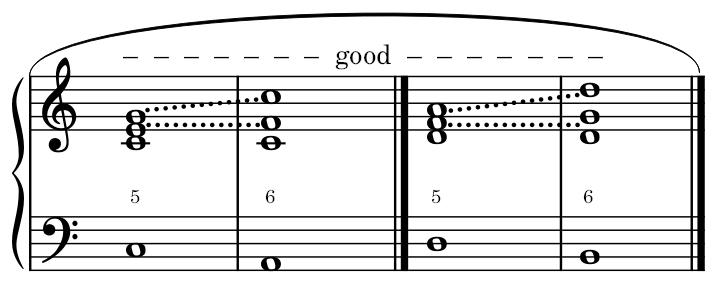
Exception #3: The progression of upper thirds, is generally rarely used in the root position, but is frequently used when the second chord is in the first inversion, and its major or minor.
Example: Major

Example: minor
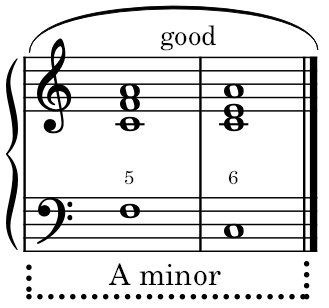
This progression is tolerable even when leading to a bad degree. Example:
For notes to be double or suppressed, see 2.4. However, the first inversion requires certain modifications to the general rule.
The root or the fifth of the chord can be doubled, depending on the position and progression. Sometimes even the third can be doubled, as long as its not in the upper part. Example:
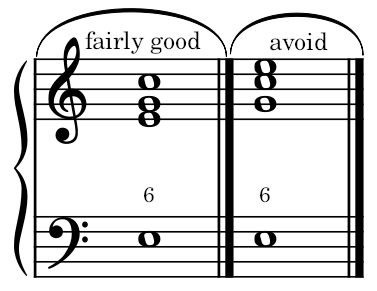
When the third of the chord is one of the good notes of the scale (3.2), preferably double this note.
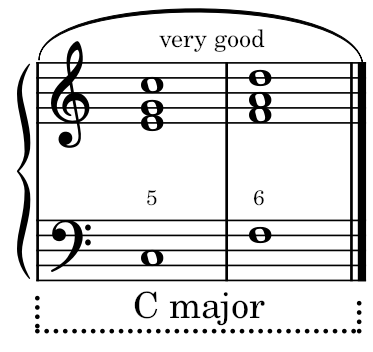
Remember, the leading tone is never doubled.
Basses to realize
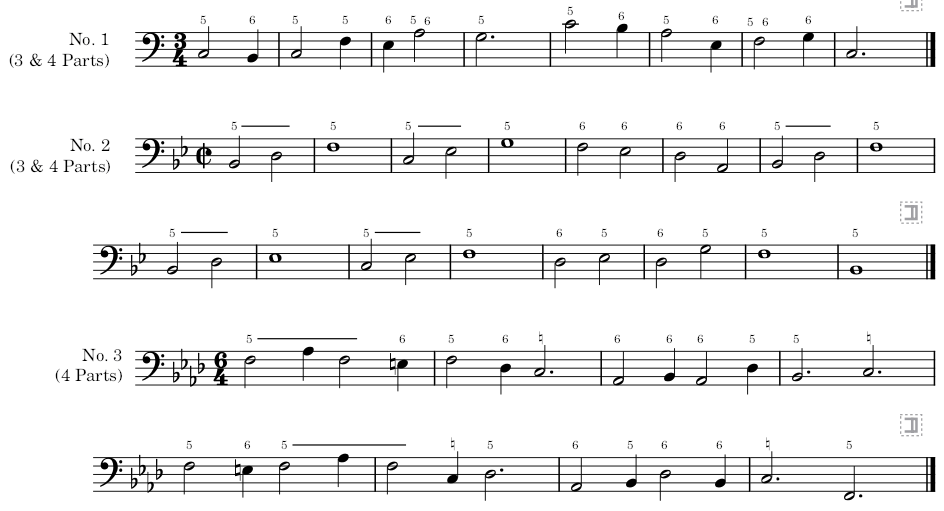
Given melodies (*)
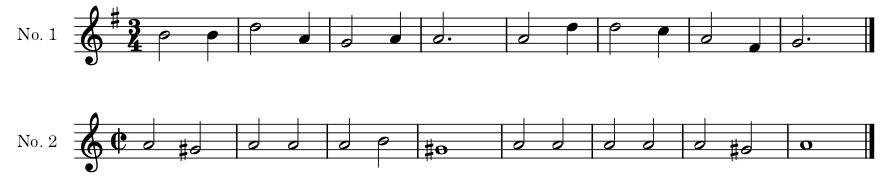
(*) Use of the first inversion is required.
 Old Music Theory