
A chord retains the name of the root, regardless of the order the notes are presented.
In order to identify chords properly and to explain the laws of chord progressions in their inversions, one should always consult the root note and not the Bass note. So in this example:
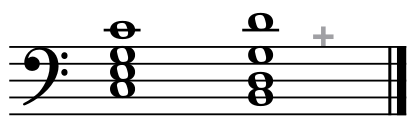
The root of the second chord is G. Consequently, the chord progression is C to G, which is a fourth below, not the apparent succession of seconds (C, B) formed by the melodic movement of the Bass. In this example:
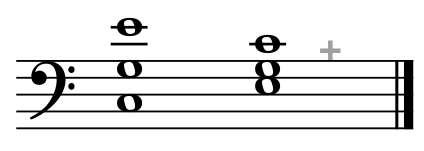
the second chord is only a former of the previous chord, even if the Bass moves a third above, there is no progression by a third above.
Note: The student must get used to naming the roots of these chords, the nature of each inversion, and the chord progression of the root. The student must follow this method throughout the course of this work. When he is established on these principles they will be free to use more brief terms and to call chords by the names of their roots.
 Old Music Theory