
1. Progression by a second below or second above, but only if the latter chord is a good degree (See 3.2.)
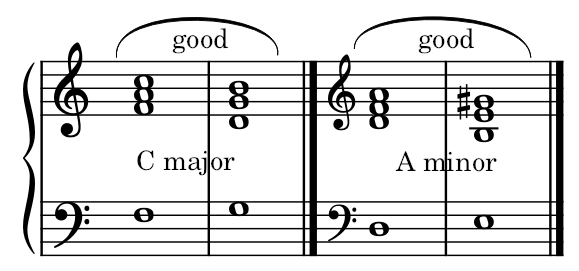
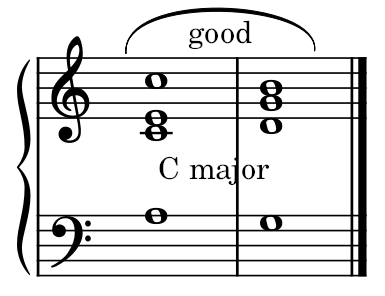
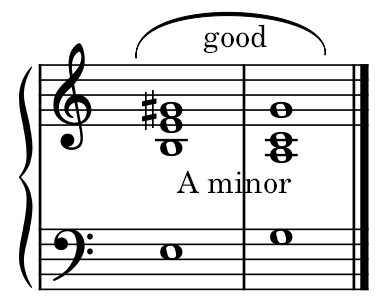
Examples of a good degree to a good degree:
4th to 5th degree: (A)
6th to 5th degree: (B)
5th to 6th degree: (C)
etc.
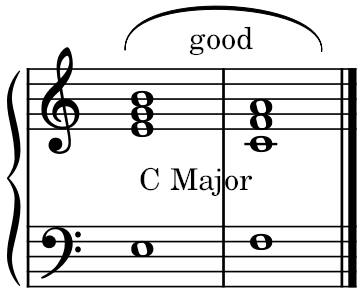
Example of bad degree to a good degree:
3rd to 4th degree: (D)
This progression is not allowed to move from a good degree to a bad degree. Example: (E)
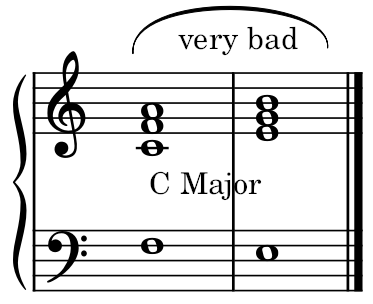
The progressions by seconds is best when it leads to a better degree, and conversely, is more defective when it leads to a worse degree. Thus, while a progression from the first to the second degree can be practiced, second to the first has a better effect.
Observation: This progression is subject to an important modification regarding the progression from the 5th to the 4th degree: (F)

This progression in certain positions often produces harsh effects, attributed by the old contrapuntists, to the indirect relation of the B to the F (or of any notes an interval of an augmented fourth apart). In counterpoint, this is known as the False Relation of the Tritone.
This peculiarity has given rise to obscure and contradictory rules in counterpoint treaties. It’s undeniable Ex.F is harsh. But why are the Ex. A, C, D, which also contain the False Relation of the Tritone, good and much used by the masters? Its not important to know the cause. Whats essential to know and appreciate are the effects of the progressions, and in this respect the progression of seconds rule is good enough to guide inexperience.
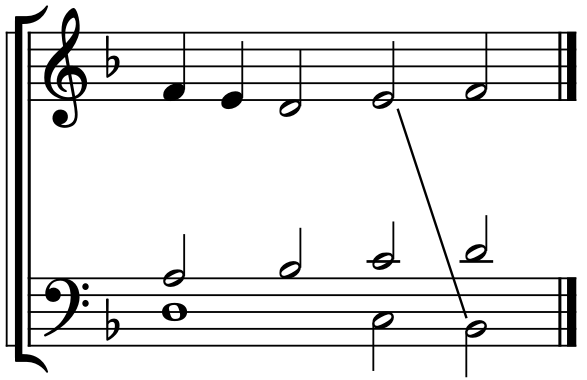
As for the sequence of the 5th degree to the 4th degree, its not practiced frequently. Moreover, its satisfactory effect depends on its realization. Thus:
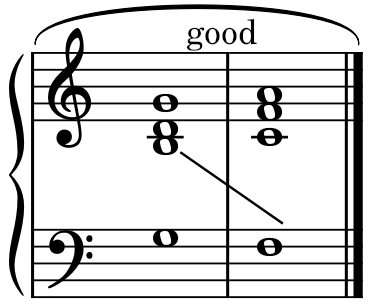
is very acceptable and indefinitely preferable to Ex. F, which becomes intolerable in two parts. Example:

From this we can conclude its good to impose this rule on the student:
Rule: Its forbidden to place the tritone in the extreme parts in the progression from the 5th to the 4th degree.
Note: Its interesting to note here that 16th century masters, including Palestrina, practiced the tritone relationship quite frequently. Example:
(PALESTRINA, Sanctus, after mass ÆTERNA CHRISTI MUNERA).
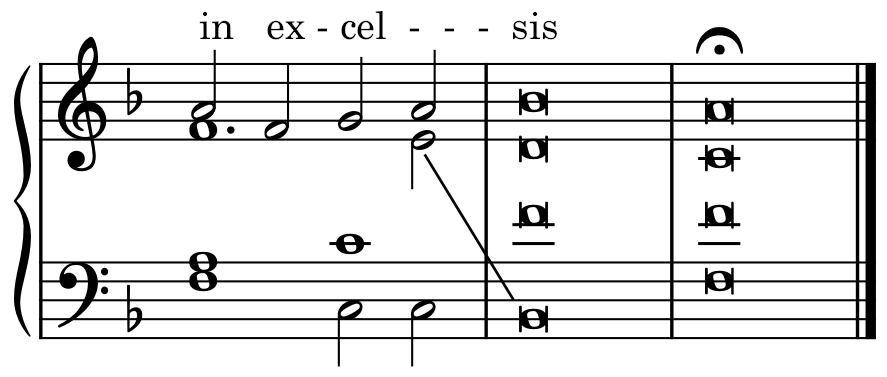
and even in the extreme parts. Examples:
(Sanctus, of the same mass).
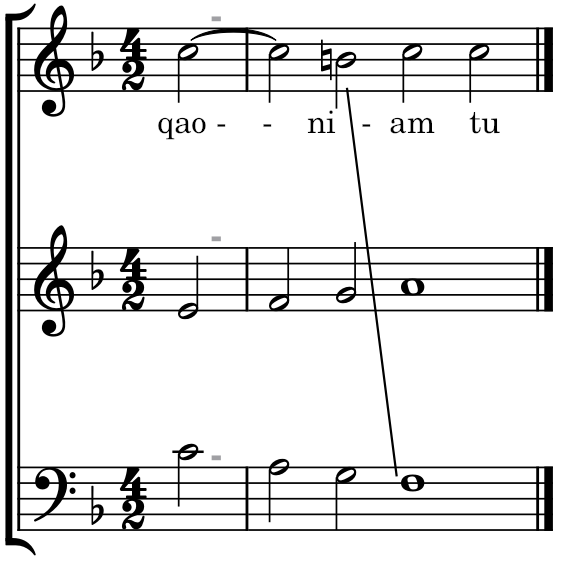
(Gloria, from the same mass).
2. By a third above or its inversion, the sixth below. This progression, less used than previous progressions, is of a very weak effect when the latter chord is minor.

But its effect is good when the latter chord is major.

The progression of thirds above is good every time that it leads to a good degree.
Avoid the repeated use of second-order successions.
 Old Music Theory