
These 3 progressions can be used regardless of the chord that we leave and chord that we arrive at, good or bad. One can already construct satisfying chord progressions by their use alone; that’s why they’re called First Order Progressions.
1. Progression by a third below, or its inversion, the sixth above:
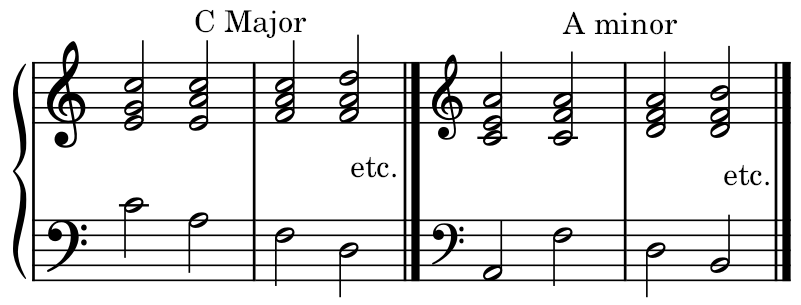
2. Progression by a fourth below, or its inversion, the fifth above:

3. Progression by a fifth below, or its inversion, the fourth above:
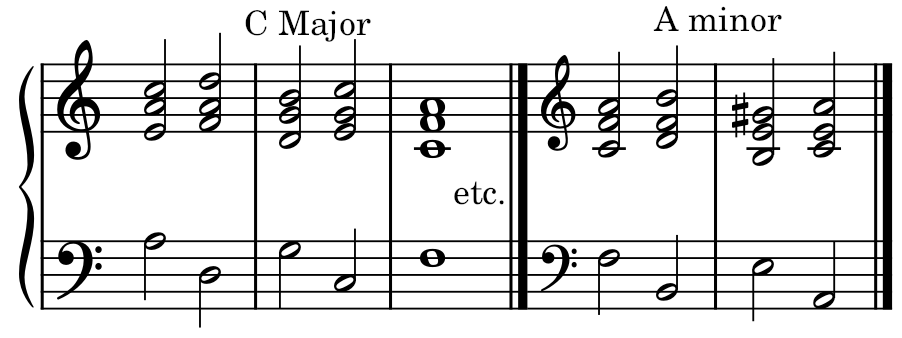
Exercise:
Practice playing in different tones, connecting chords by intermingling the different First Order Progressions, similar to how they appear in the following Basses:

NOTE: the 7th degree of the two modes is not used, and the 3rd degree of the minor mode does not exist.
 Old Music Theory