
Starting a phrase in a key other than the key of the previous phrase is not modulating. It’s just a change of key. This process, which is only in fantasia or impromptu, can also take place from one part of a phrase to another. The reflections of 10.4 are also applicable to a change of key.
In the supplementary chapter, there are examples containing exceptions to realizing changes of key.
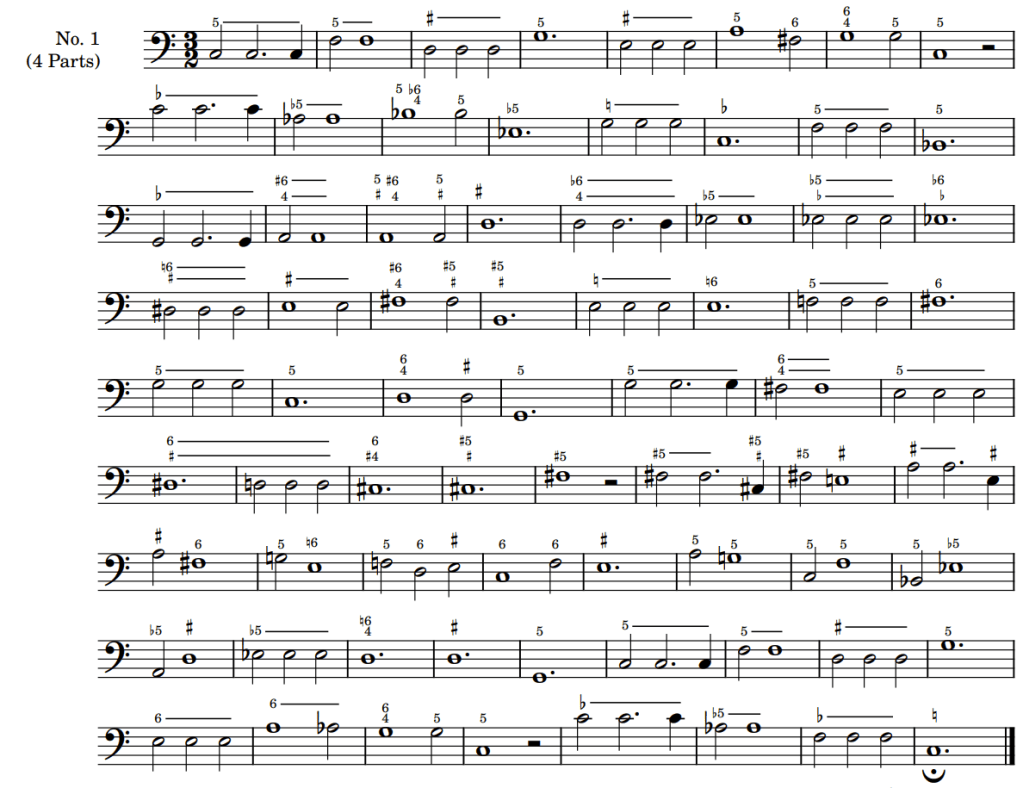
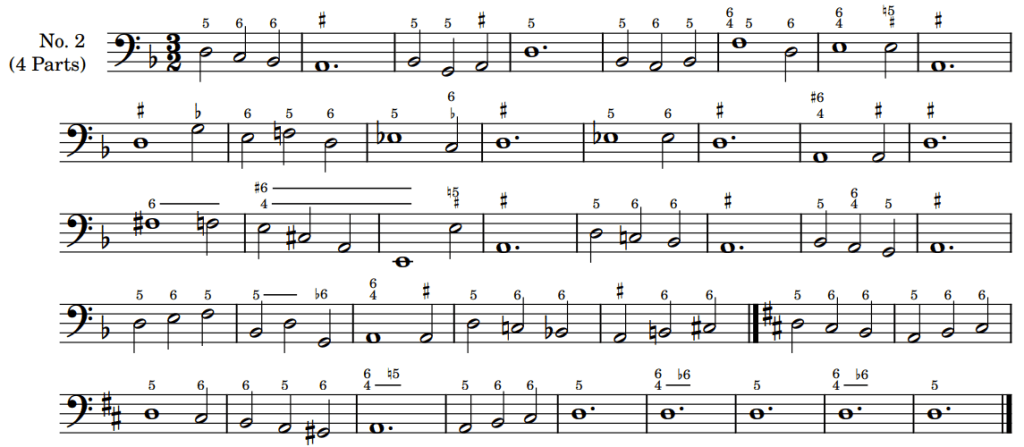
Basses to realize
Concerning articles 5, 6, 7, 8, 9 and 10 of chapter 10 (Modulation)
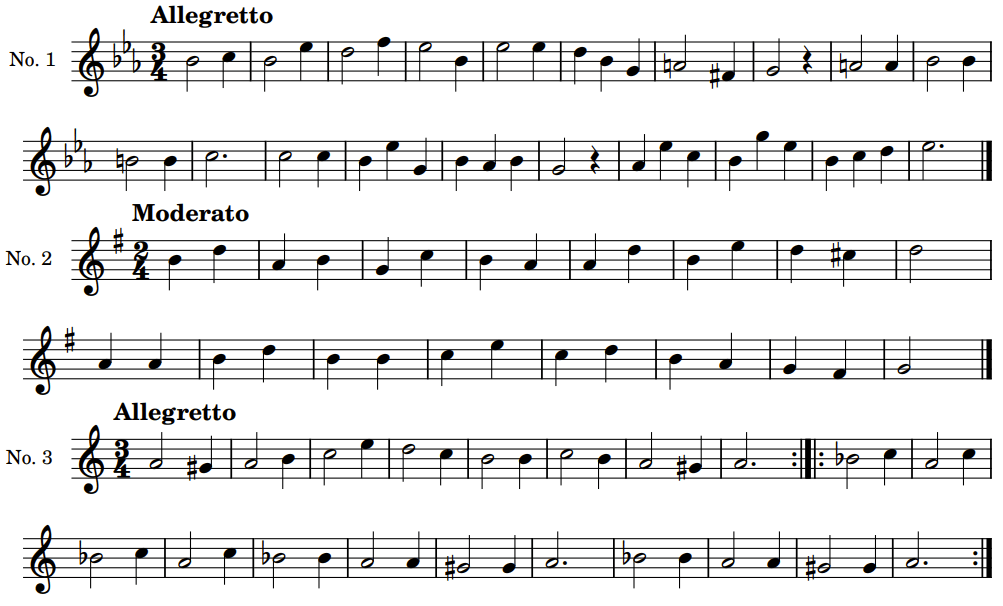
Given melodies
The instructions provided for the 2nd inversion exercises will also be applied here. Furthermore, from here onwards we will focus on understanding the character and requirements of the principle melody from the perspective of modulations (either direct or passing), as well as the borrowed chords suggested by the melody, while optional, can contribute to enriching the harmony. The use of these borrowed chords will naturally become more frequent as we continue our understanding of chords.
Note: in the realization of the harmony of the given melodies, we may sometimes be able to double a note in unison, as long as its of short duration.
 Old Music Theory