
Enharmonic Modulations should be used with extreme caution, as the enharmonic interval often provokes hesitation and lack of precision in vocal performances and non-tempered instruments.
To overcome these issues, we must sometimes allow one or more chords to appear to the inconsistent to the eye, but still sounds pleasing to the ear. Example:
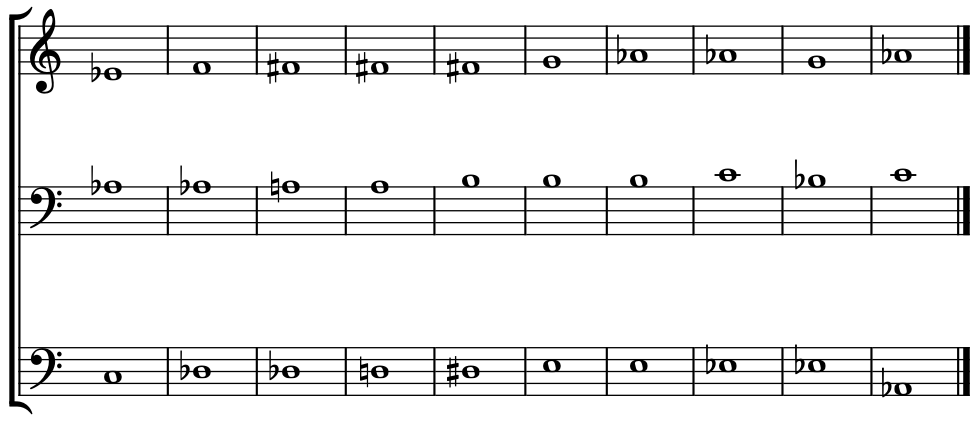
This type of writing often ensures the accuracy and ease of execution of the parts, but disturbs how the score is read. For the organ/piano, the same example must be written correctly, as follows:
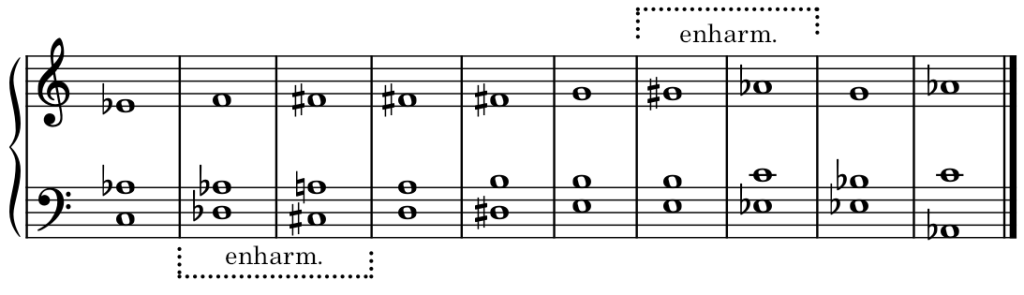
The student, in all cases, will write the chords with enharmonic changes correctly.
 Old Music Theory